Invisible Influence: The Rise of Scent as Architecture and the New Language of Luxury
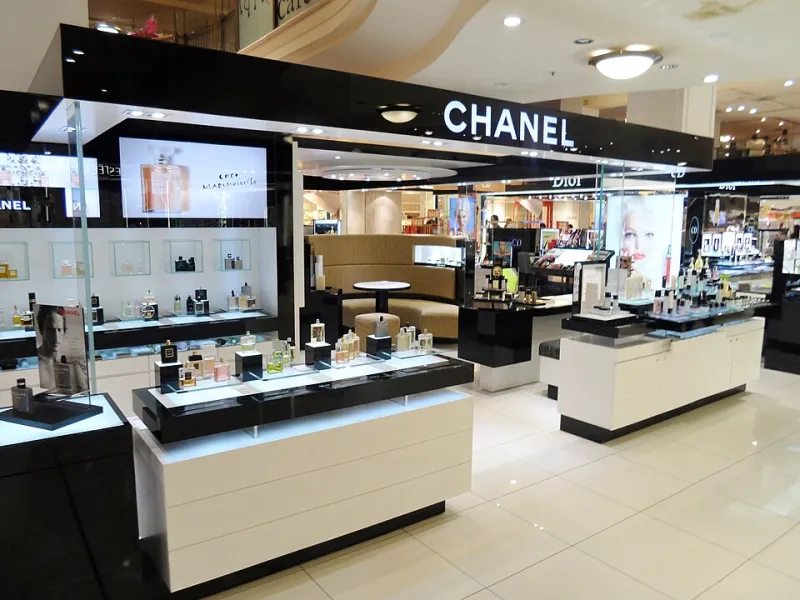
Photo: Pear285 (talk) (Uploads), CC0, via Wikimedia Commons
What You Smell Before You See
Before you register the marble floors, before you absorb the proportion of the ceilings or the considered placement of the lighting, you have already received the most important communication the space has to offer. You have inhaled it. In the flagship stores, hotel lobbies, and private residences of the American luxury market, scent has quietly assumed the role of primary brand ambassador—and its authority over your emotional state is nearly absolute.
This is not an accident. It is design.
Olfactory design—the discipline of engineering scent environments to produce specific psychological and social effects—has matured over the past decade from a hospitality industry novelty into a rigorous creative practice with its own vocabulary, its own star practitioners, and its own considerable price tags. The brands investing most heavily in it are not doing so for atmosphere. They are doing so for power.
The Science of the First Breath
The neurological case for scent's influence on human behavior is by now well established. Unlike visual or auditory information, olfactory signals travel directly to the limbic system—the brain's emotional and memory center—without first passing through the rational filtering of the neocortex. In practical terms, this means that a carefully designed scent environment can generate feelings of comfort, aspiration, trust, or exclusivity before a visitor has had a single conscious thought about the space they have entered.
"Scent bypasses the critical mind entirely," explains a New York-based olfactory designer whose client list spans luxury retail, boutique hospitality, and private residential commissions. "Every other design discipline is working on the conscious level—you can evaluate a chair, you can decide whether you like a color. Scent operates below that threshold. It shapes how you feel about a space before you've decided to feel anything."
For luxury brands, this neurological directness is extraordinarily valuable. The emotional associations a proprietary scent generates—warmth, rarity, refinement, a vague but persistent sense of arrival—become inseparable from the brand identity itself, woven into the customer's memory at a level that no visual logo can reliably reach.
Scent as Class Signal
The social dimension of olfactory design is where the conversation becomes most charged. Luxury brands have long understood that their most effective products are not those that display wealth but those that communicate it laterally—to those already fluent in the code. A proprietary scent, diffused through a flagship store or a private members' club, functions as precisely this kind of lateral signal: invisible to those who do not know to notice it, unmistakable to those who do.
Several major American luxury retailers have invested substantially in developing what the industry calls a "scent signature"—a fragrance formulated exclusively for a brand's physical spaces, never sold commercially, and encountered only by those who physically enter the brand's world. The effect is both intimate and deeply strategic. Customers who have spent time in these spaces carry a sensory memory of the experience that is triggered, involuntarily, whenever they encounter a similar olfactory note. The brand has, in a meaningful sense, colonized a corner of their emotional life.
"The most expensive thing a luxury brand can do is make you feel like you belong somewhere," observes a cultural critic and design theorist based in Chicago. "Scent is the most efficient tool for that project we've ever found. It's immediate, it's non-verbal, and it's almost impossible to consciously resist."
The Residential Turn
What began in commercial flagships has migrated steadily into the private sphere. The market for residential olfactory design—bespoke scent programs developed for individual homes, estates, and apartment buildings—has expanded significantly in recent years, driven by a clientele that has absorbed the logic of luxury hospitality and applied it to their personal environments.
High-end residential architects are increasingly collaborating with scent designers from the earliest stages of a project, treating olfactory experience as a structural element on par with light and sound. The goal, in the most ambitious commissions, is what practitioners describe as a "scent architecture": a programmatic arrangement of different fragrance registers across the spaces of a home, shifting from the cool minerality of an entrance to the warmer, more complex notes of a living area to something softer and more intimate in private rooms.
One Los Angeles-based architect who has integrated scent design into several recent residential projects describes the discipline as "the last frontier of total design." "We've been thinking seriously about every other sensory dimension for decades," she notes. "Scent was the one that got left out of the conversation, largely because it was considered too subjective, too ephemeral. What's changed is that the tools for working with it have become precise enough to treat it as a real design material."
The Ethics of the Invisible
The sophistication of olfactory design invites a question that its practitioners are increasingly willing to engage: at what point does emotional engineering become manipulation? The same neurological directness that makes scent so effective as a design tool also makes it unusually difficult for the people experiencing it to recognize or consent to its influence.
Luxury brands deploy proprietary scents in their stores with the explicit intention of generating positive emotion and brand loyalty. Hotel groups use scent programs to make guests feel more relaxed, more willing to spend, more likely to return. The manipulation, to the extent that the word applies, is largely benign in intent—but it is manipulation nonetheless, operating through a channel that most people do not think to interrogate.
Some cultural critics have begun to frame the olfactory turn in luxury as a symptom of a broader phenomenon: the increasing sophistication with which commercial environments engineer consent and belonging. The scented flagship, in this reading, is not simply a pleasant retail experience—it is an immersive argument, made in the language of your own nervous system, that this brand, this space, this social world is where you belong.
The Most Primal Luxury
For all the strategic calculation that underlies it, olfactory design taps into something that precedes commerce entirely. Scent has always been the sense most intimately tied to memory, to place, to the particular texture of a moment in time. The luxury industry's appropriation of this primacy is, in its way, a tribute to just how powerful the association between smell and belonging truly is.
The most successful scent environments—those that generate the deepest sense of arrival and ease—are not merely those engineered with the greatest technical precision. They are those that manage to feel, despite everything, like memory rather than strategy. That tension, between the manufactured and the deeply felt, is perhaps the defining condition of luxury in the present moment. And the nose, as ever, knows it first.