Cluttered on Purpose: Why Designers Are Embracing Chaos to Fight the Coldness of the Digital Age
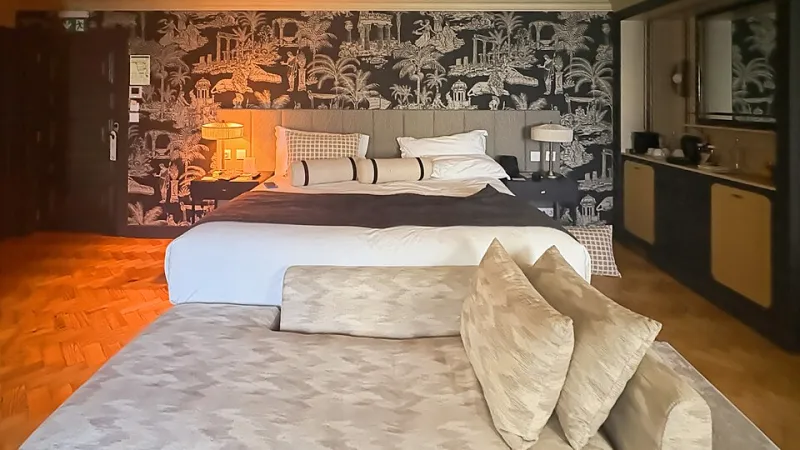
Photo: Dale Cruse - 10M views from San Francisco, CA, USA, CC BY 4.0, via Wikimedia Commons
The Room That Remembers You
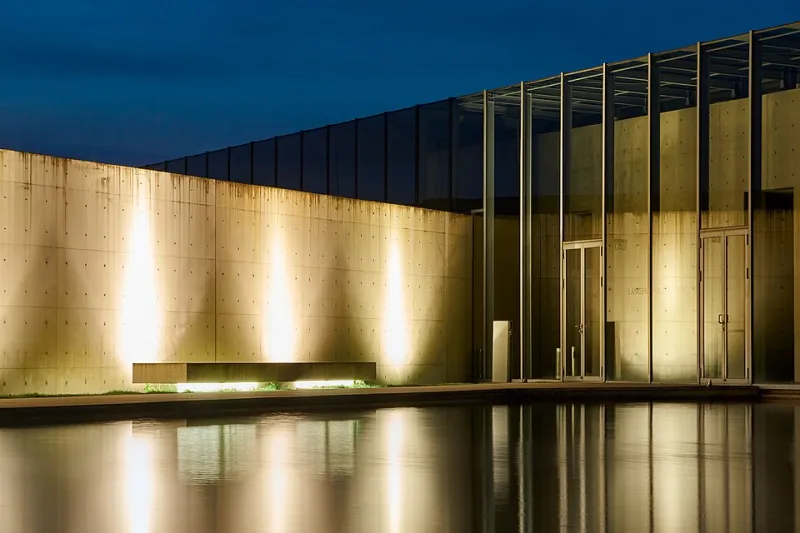
There is a particular silence that descends when you enter a space designed entirely for the photograph. You have felt it—in the bone-white Airbnb with its single succulent, in the corporate lobby where every surface has been sanded of personality, in the friend's living room that looks, inexplicably, like a render. These spaces do not remember you. They were never intended to. They exist as backdrops, optimized for the scroll.
It is precisely this silence that a growing cohort of American designers, artists, and tastemakers is now working to shatter—loudly, ornately, and with considerable conviction.
Maximalism, once dismissed as the aesthetic crime of the overwhelmed, has undergone a quiet but decisive rehabilitation. The movement gathering force in studios from Brooklyn to Silver Lake is not the maximalism of accumulation for its own sake. It is something more deliberate: a philosophy of presence, a design language that insists on being felt rather than merely seen. Call it emotional density. Call it, as some practitioners do, the aesthetics of the inhabited.
When Less Became a Loneliness Problem
The dominance of minimalism in contemporary design was never purely aesthetic. It was ideological—a visual language that promised clarity, control, and the kind of aspirational blankness that photographs well on a four-inch screen. Silicon Valley evangelized it. Instagram codified it. And for roughly a decade, the American design conversation was largely conducted in the grammar of negative space.
But minimalism, for all its elegance, carries a hidden cost. Stripped of ornament, stripped of accumulation, stripped of the evidence of a life actually lived, a space loses what designers are increasingly calling its narrative texture—the visual and tactile record of choices, obsessions, inheritances, and accidents that tells a visitor something true about the person who inhabits it.
"There's a reason people feel vaguely sad in those spaces, even when they can't articulate why," says one Brooklyn-based interior designer who has spent the last three years deliberately moving her practice toward what she calls "generous interiors." "When everything is edited out, you've also edited out the human. And humans can feel that absence immediately."
The timing of maximalism's resurgence is not coincidental. It has arrived in step with a growing national conversation about loneliness—a crisis the U.S. Surgeon General has formally named as a public health emergency. When our social lives migrated online, they migrated into spaces governed by algorithmic minimalism: the clean white field of a social feed, the reductive interface of a messaging app, the smoothed-out, friction-free experience that tech companies have spent billions perfecting. The digital world, for all its connectivity, is a sensory desert.
Baroque as a Radical Act
The designers leading this counter-movement are drawing from a surprisingly wide range of historical sources. Baroque and Rococo ornamentation—those gilded excesses once condemned by modernist critics as the visual language of decadence—have been reclaimed as something closer to emotional honesty. The logic is not nostalgic but philosophical: a heavily ornamented surface is a surface that demands your attention, that rewards sustained looking, that refuses to be consumed in a single glance.
In practice, this translates into spaces layered with pattern on pattern, walls hung with objects that accumulate meaning over time, rooms where the light falls across textured surfaces and produces something genuinely unrepeatable. These are spaces that do not look the same in every photograph, because they were not designed for photographs.
One Los Angeles-based artist and set designer describes her home as "an argument against convenience." Every surface holds something: stacks of art books with cracked spines, a collection of antique hand mirrors, ceramic pieces from makers she met at regional craft fairs, a wall of postcards accumulated over fifteen years of deliberate travel. "I want people to walk in and immediately feel that a specific person lives here," she explains. "Not a demographic. Not a consumer profile. A person."
This resistance to demographic flattening is central to the movement's ethos. The maximalist interior, at its most articulate, is a portrait—an act of self-disclosure that the algorithm cannot generate on your behalf.
Analog Clutter as Intimacy Technology
Perhaps the most striking aspect of this design turn is the deliberate embrace of what might be called productive disorder: the visible evidence of process, of use, of imperfection. In a cultural environment that has fetishized the frictionless and the seamless, the handmade, the worn, and the unfinished carry a specific emotional charge.
Craft markets across the country have reported surging attendance among younger buyers who are not simply purchasing objects but purchasing the story of the object's making—the potter's fingerprint in the clay, the slight asymmetry in the hand-thrown bowl, the textile whose dye has bled at the edges. These imperfections are not flaws to be corrected. They are, in the vocabulary of the new maximalism, the whole point.
This is design that insists on the human hand at every turn, a deliberate counter-programming to the pixel-perfect surfaces of digital life. The clutter is not chaos—it is choreographed intimacy.
The Space Between Screens
What the maximalist turn ultimately reveals is something more urgent than a trend cycle. It surfaces a genuine cultural need: for spaces that do not perform neutrality, for environments that hold memory and generate meaning, for the kind of sensory richness that no interface—however elegantly designed—can replicate.
The room that remembers you, that holds the accumulation of your particular life in its objects and its layers and its organized disorder, is functioning as something a therapist might recognize: a container for identity, a physical argument for the irreducible specificity of a single human existence.
In that sense, the maximalists are not decorating. They are, in the most serious meaning of the phrase, making space for themselves—in a world that has grown very good at making space for no one at all.