The Empty Shelf as Statement: How Refusing to Collect Became the New Collecting

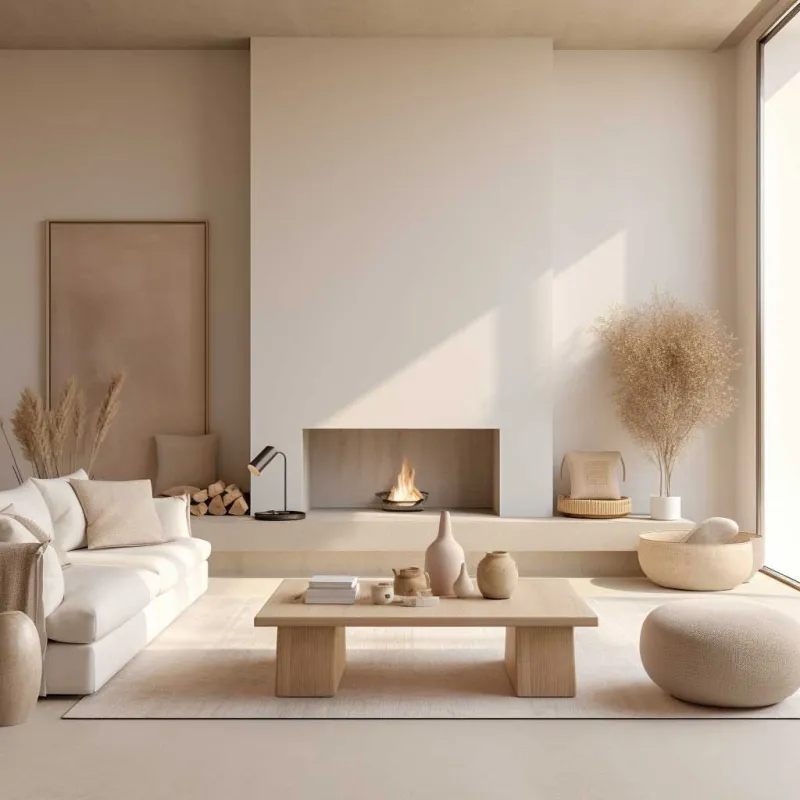
Photo: minimalist empty shelf interior design art collector sparse room, via img.freepik.com
There is a particular kind of confidence required to walk into a gallery, admire something deeply, and leave without it. Not because of price, not because of space, but because of principle. It is the confidence of someone who has already decided, with considerable deliberation, that the act of not owning is itself a form of ownership — ownership of one's own discernment.
This is the quiet logic animating a growing cohort of collectors, curators, and cultural figures across the United States who are redefining what it means to have taste in the age of infinite scroll. Their collections, in the traditional sense, are conspicuously spare. Their bookshelves hold fewer volumes than you might expect. Their walls carry fewer works. And yet their cultural authority — in certain rooms, in certain conversations — is considerable. Perhaps because of it.
The Grammar of Refusal
To understand this movement, one must first understand the environment it is reacting against. The past decade has produced an unprecedented democratization of access to objects, images, and ideas. Platforms like Etsy, 1stDibs, and Instagram's shoppable feeds have collapsed the distance between desire and acquisition to something approximating zero. The result is a culture in which ownership has become reflexive — a default response to admiration rather than a considered one.
Into this context arrives the deliberate non-acquirer. Where the average consumer experiences desire as a trigger for purchase, these individuals experience it as an invitation to pause. The pause, they argue, is where taste actually lives. Acquisition, by contrast, is merely its most legible — and least interesting — expression.
Cultural theorists have long understood that exclusion is a primary mechanism of distinction. What is newer, and more specific to this moment, is the idea that self-exclusion — the voluntary removal of oneself from the cycle of getting and having — can function as its own form of social signaling. When everyone can own nearly anything, choosing to own very little becomes the more remarkable statement.
Curating the Negative Space
In design and architecture, negative space is understood not as absence but as active compositional force. The empty wall does not merely lack a painting; it frames everything adjacent to it. The same logic, transplanted into the domain of personal collecting, produces something genuinely interesting: a practice in which what one declines to acquire shapes the meaning of what one keeps.
Several prominent figures in American design and arts culture have begun articulating this practice explicitly. Collectors who once measured their sophistication in acquisitions now speak instead of their refusals — the artist they admired but did not buy, the first edition they considered and set aside, the limited-edition object they allowed to sell out without placing an order. These are not stories of regret. They are, in the telling, trophies of a different order.
This is not minimalism in the Marie Kondo sense — that domestic, therapeutic project of decluttering toward clarity. It is something more philosophically ambitious: a curatorial stance applied not just to one's existing possessions but to the entire future stream of objects one might encounter. The question is no longer "does this spark joy" but rather "does this deserve a place in a collection already defined by its selectivity?"
Anti-Consumerism as Cultural Capital
The uncomfortable truth lurking beneath this trend is that deliberate non-acquisition has itself become a status performance. In certain coastal cities and creative industries, the person who mentions, almost in passing, that they stopped buying art three years ago — not because they fell out of love with it but because they felt their collection had reached a kind of completion — occupies a rarefied position. They have transcended the wanting.
This is, of course, a posture available primarily to those who have already acquired enough to feel the weight of acquisition. The aesthetics of restraint are most legible when set against a background of demonstrated capacity. A sparse apartment in a premium Manhattan building reads differently than a sparse apartment anywhere else. Context, as always, carries the argument.
And yet to dismiss this entirely as performance would be to miss something genuine in the impulse. Many who practice deliberate non-acquisition describe a real shift in their relationship to objects — a slowing of the reflexive desire that digital commerce has so expertly cultivated. They report spending more time with what they already own, attending more carefully to its qualities, developing a more nuanced understanding of why they valued it in the first place. The collection, no longer growing, becomes something to be read rather than merely added to.
Digital Minimalism and the Algorithmic Counterweight
The rise of this sensibility is inseparable from the rise of algorithmic consumption. Recommendation engines have become extraordinarily adept at identifying and amplifying desire, presenting an endless succession of objects calibrated to individual taste. The result, for many users, is a kind of desire fatigue — a numbing of the acquisitive impulse through its relentless stimulation.
Deliberate non-acquisition can be understood, in part, as a response to this fatigue. It is a reassertion of human editorial judgment over machine-generated suggestion. Where the algorithm says "you might also like," the principled non-acquirer says: perhaps, but I have already decided what I like, and I am not accepting new submissions.
This is digital minimalism expressed not merely as a reduction of screen time but as a philosophical position on the nature of cultural engagement. It insists that depth of attention is more valuable than breadth of acquisition — that knowing one object profoundly is a richer experience than owning a hundred objects casually.
What the Refusal Reveals
There is, ultimately, something clarifying about a collection defined by its limits. Every object in a deliberately constrained collection carries more weight, more intentionality, more of the collector's considered self. The empty shelf is not a failure of desire but a record of it — a map of all the things that were encountered, considered, and found wanting against a standard that the collector has set, and continues to set, for themselves.
In a culture that has made acquisition so easy as to render it nearly meaningless, the decision to acquire nothing — or nearly nothing — is perhaps the most legible declaration of seriousness a collector can make. It says: I know what I want. I know what I already have. And I am not interested in anything less than the extraordinary.
That is, in the end, a curatorial position. It simply happens to be expressed through absence rather than presence. And in the current moment, absence may be the more eloquent language.