The Art of Withholding: How Absence Became the Most Daring Move in Contemporary Creativity

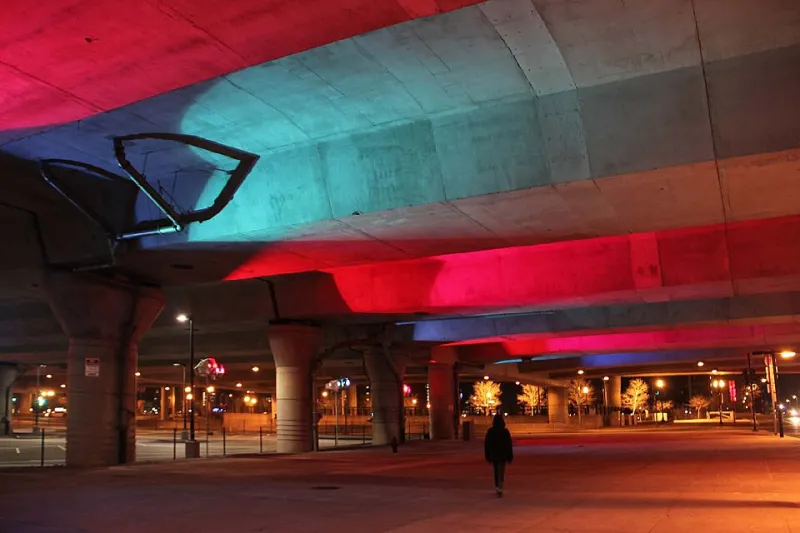
Photo: Dietmar Rabich, CC BY-SA 4.0, via Wikimedia Commons
There is a particular discomfort that settles over an audience when a musician holds a note and then does not follow it. The silence that opens up is not empty in any conventional sense. It is pressurized. It carries weight. And in the hands of a skilled practitioner, it communicates something that no additional sound could possibly achieve. This is not a new observation—composers from Debussy to Miles Davis understood it intuitively—but what is new is the cultural urgency behind the gesture. Today, choosing not to fill that silence is an act of near-defiance.
We are living through an era of extraordinary content saturation. Streaming platforms demand perpetual output. Social media algorithms reward volume and frequency. The creative economy has quietly restructured itself around the premise that more is always better—more releases, more posts, more stimulation, more product. Against this backdrop, a growing number of artists, musicians, and designers are arriving at the same counterintuitive conclusion: that the most powerful thing they can offer is less.
The Compositional Power of Duration
In experimental music circles, the conversation around absence has grown remarkably sophisticated. Artists working in ambient, drone, and post-minimalist traditions have long used duration and stillness as primary compositional elements, but the discourse has recently migrated into more mainstream creative spaces. Performers who might once have filled every measure are now allowing extended rests to accumulate into something structural—pauses that function not as breathing room between ideas but as ideas themselves.
This is, in part, a direct inheritance from the legacy of John Cage, whose 1952 composition 4'33"—in which a pianist sits at a keyboard and plays nothing—remains one of the most provocative statements in the history of American art. What Cage proposed was not nihilism but attentiveness: an invitation to hear what was already present. Decades later, that invitation feels less like a philosophical puzzle and more like a practical necessity. In a sonic environment saturated with notification sounds, algorithmic playlists, and ambient commercial audio, deliberate silence has become genuinely rare—and therefore genuinely disruptive.
Contemporary composers and producers working at the intersection of electronic music and sound art are extending this logic into new territory. Rather than treating quiet as a technical limitation or an aesthetic accident, they are engineering it. They are designing tracks with structural voids, live performances built around prolonged silences, and releases that resist the compression and loudness normalization that streaming platforms tend to reward. The refusal to optimize for the platform is itself part of the statement.
Negative Space as Primary Material
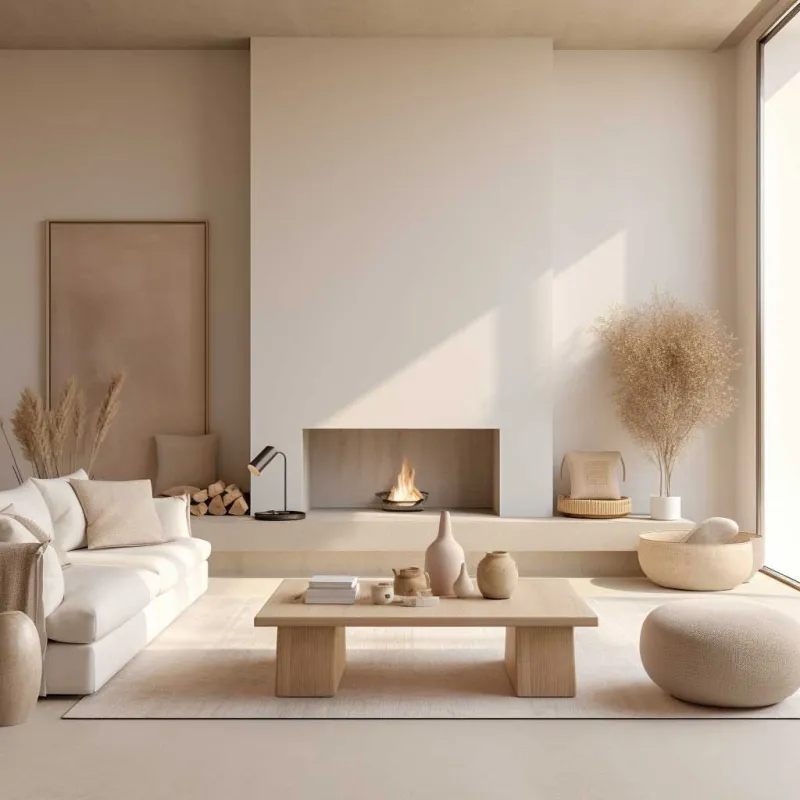
The parallel conversation in visual art is equally charged. For decades, negative space—the area surrounding or between the subjects of an image—was taught as a supporting element, a background against which form could be read. That hierarchy is being actively dismantled by a generation of painters, photographers, and installation artists who treat the void as the subject itself.
In gallery contexts across New York, Los Angeles, and Chicago, exhibitions have increasingly centered on what is absent from the frame. Large-scale canvases with minimal mark-making. Photographs in which the central subject is implied rather than depicted. Sculptures that define themselves by the air they displace rather than the material they contain. The critical reception of such work has shifted too—what was once dismissed as austere or inaccessible is now being read, correctly, as a form of restraint that demands more from the viewer rather than less.
This demand is itself a political act of sorts. In a visual culture that has trained audiences to expect immediate gratification—the image that explains itself in under three seconds, the composition optimized for a thumbnail—work that requires duration, attention, and a willingness to sit with uncertainty is implicitly challenging the terms of engagement. It is asking the viewer to slow down in a context that has been engineered for speed.
Emptiness as Cultural Resistance
What unites these gestures across disciplines is their shared relationship to a broader cultural anxiety: the fear that stillness is indistinguishable from irrelevance. The pressure to produce is not merely economic, though it is certainly that. It is also psychological, embedded in a creative culture that has come to equate output with vitality. An artist who is not constantly releasing, posting, or iterating risks being read as stagnant—or worse, as finished.
The creators who are pushing back against this logic are not, by and large, doing so from a position of luxury or indifference. Many are acutely aware of the professional risks involved in withholding. What distinguishes them is a conviction that the work itself demands it—that certain ideas can only be expressed through reduction, and that adding material to satisfy an external appetite for content would be a form of artistic dishonesty.
This conviction connects to a longer tradition of creative minimalism in American culture, from the spare prose of Raymond Carver to the stripped architecture of Tadao Ando's work as absorbed and reinterpreted by American designers. But it also connects to something more immediate: a widespread sense that the culture has become so cluttered, so relentlessly stimulating, that the most meaningful contribution an artist can make is to create conditions for quiet.
What Listening Requires
There is something worth sitting with in the idea that emptiness requires more of an audience than fullness does. A maximalist work—a dense arrangement, an image crowded with information, a text that explains itself exhaustively—can be received passively. It delivers. Absence, by contrast, creates a space that the audience must actively inhabit. It makes the listener or viewer a participant in the construction of meaning rather than a passive recipient of it.
This is, arguably, what the most enduring art has always done. But in the current moment, the stakes feel different. The cultural infrastructure surrounding creative work has been redesigned to minimize friction, to deliver meaning instantly and efficiently. Work that refuses those terms is not simply aesthetically unusual—it is structurally resistant to the systems that now govern how culture is produced and consumed.
That resistance is not without cost. Artists who build their practice around duration, silence, and negative space often find themselves operating at the margins of an attention economy that rewards immediacy. But it is precisely at those margins that the most interesting questions about creativity, communication, and cultural value tend to be asked.
The silence between notes, it turns out, is not a gap in the music. It is the music insisting on its own terms. And in a world that has almost entirely forgotten how to be quiet, that insistence is one of the more daring things a creator can offer.