The Accidental Curators: When a Following Became the New Credential
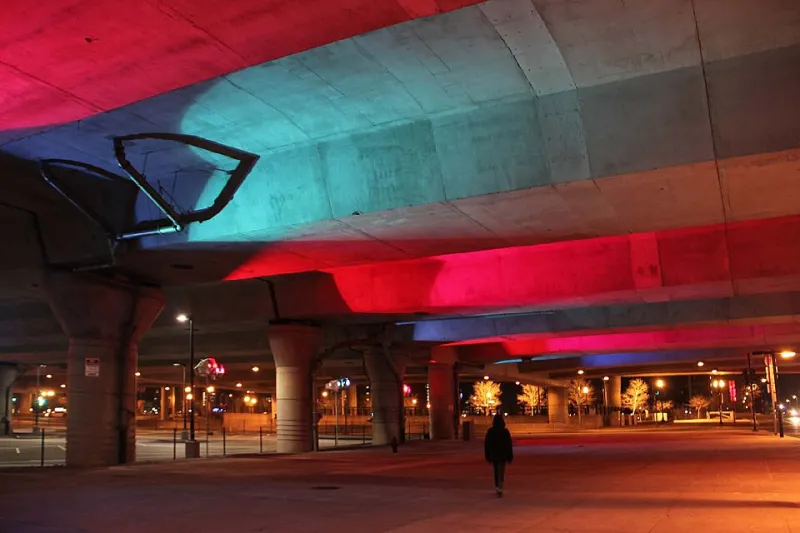
Photo: MassDOT, Public domain, via Wikimedia Commons
There is a particular kind of power that announces itself quietly. It does not arrive with a press release or a tenure appointment. It accumulates in follower counts, in comment sections, in the soft tyranny of the save button. Over the past decade, a new class of cultural authority has emerged in the United States — not from the hallowed corridors of the Whitney or the editorial offices of Artforum, but from the curated grids and video essays of social media's most persuasive voices. They did not apply for the job. They simply showed up and, eventually, everyone started listening.
The question worth asking — and worth sitting with uncomfortably — is whether that shift represents a genuine democratization of taste, or merely the substitution of one gatekeeping apparatus for another, this one dressed in better lighting and a more accessible vocabulary.
The Collapse of the Old Architecture
For most of the twentieth century, the architecture of cultural legitimacy was legible if not always equitable. Museums acquired. Critics reviewed. Galleries represented. Collectors purchased. Each institution reinforced the others in a closed loop that determined what counted as serious art and design, and who counted as a serious practitioner. The system was hierarchical, frequently exclusionary, and deeply resistant to disruption.
Then the disruption arrived anyway, not through any single dramatic rupture but through the slow accumulation of platforms that gave individuals the tools to publish, curate, and broadcast without institutional permission. Instagram, in particular, restructured the visual economy of art and design in ways that no one fully anticipated. A photographer in Detroit could amass an audience that rivaled the reach of a metropolitan museum's membership. A self-taught design critic in Atlanta could shape the purchasing decisions of thousands of followers who had never set foot in a design fair. The credential, it turned out, was optional.
Expertise Without Pedigree
What makes this moment genuinely complex is that the new curators are not uniformly uninformed. Many of the most influential voices operating across YouTube and Substack bring considerable knowledge to their practice — rigorous research, developed aesthetic frameworks, genuine intellectual curiosity. Video essayists like those who have built substantial audiences dissecting modernist architecture or the semiotics of luxury branding often engage with their subjects at a level of depth that would not embarrass a graduate seminar. The problem is not that they lack expertise. The problem is that expertise has been decoupled from the institutions that once certified it, and in that decoupling, the audience has largely lost the tools to distinguish between the genuinely knowledgeable and the merely confident.
Confidence, it bears noting, photographs exceptionally well.
The result is a landscape in which an emerging designer or artist must navigate two entirely separate economies of validation simultaneously. There is the traditional critical infrastructure — the reviews, the residencies, the institutional acquisitions — and there is the parallel economy of social legitimacy, where a feature on the right account can generate more professional opportunity than a favorable notice in a respected journal. Neither system is sufficient on its own. Both demand tribute.
The Paradox of the Open Door
Advocates of this new order are quick to point to its genuine achievements. Artists from communities historically excluded from institutional recognition have found audiences, markets, and cultural visibility through platforms that the old gatekeepers could not control. Craft disciplines long dismissed by fine art institutions — ceramics, textile work, furniture making — have found passionate and financially engaged audiences online. The democratization is real, and it has produced genuine cultural value.
But democracy, as any student of political philosophy will note, is not the same as meritocracy, and the conflation of the two is where the new system becomes most treacherous. Virality is not discernment. Reach is not rigor. An aesthetic sensibility that resonates with an algorithm — that photographs cleanly, that resolves quickly, that delivers its thesis in the first eight seconds before the scroll — is not necessarily the sensibility best equipped to sustain serious creative work over time. The open door is real, but the room it leads to has its own set of rules, and those rules tend to favor the photogenic, the legible, and the immediately gratifying over the challenging, the slow, or the formally ambitious.
Emerging artists who have built careers on social validation describe a particular kind of anxiety that their predecessors in the gallery system would recognize in structure if not in specifics: the constant performance of relevance, the pressure to produce content rather than work, the creeping suspicion that the audience is following a persona rather than a practice.
When the Algorithm Curates the Curator
There is a further complication that the celebratory narrative of democratization tends to elide. The social media critic is not a free agent. She is, like every other user of these platforms, subject to the preferences of the recommendation engine that determines who sees her work. The algorithm does not curate neutrally. It optimizes for engagement, which is to say it optimizes for the emotions — outrage, aspiration, desire, belonging — most likely to produce a click, a share, a follow. The critic who thrives is often the one who has learned, consciously or not, to produce content that the machine rewards.
This means that the new gatekeepers are themselves gated, shaped by systems whose priorities have nothing to do with the advancement of art or the cultivation of design literacy. The museum director answered to a board of trustees. The Instagram aesthete answers to an engagement rate. It is not obvious which accountability structure produces better outcomes for culture.
Toward a More Honest Reckoning
None of this is an argument for the restoration of the old order, which was neither as rigorous nor as disinterested as its defenders sometimes imply. Institutional gatekeeping excluded too many voices, calcified too many hierarchies, and mistook the preferences of a narrow demographic for universal aesthetic truth. The opening of the field was necessary, and much of what has come through the newly opened door has been genuinely valuable.
What is required now is a more honest accounting of what has been gained and what has been lost — and a more sophisticated framework for helping both audiences and artists navigate the resulting complexity. That might mean developing new forms of critical literacy that help people evaluate sources of aesthetic authority rather than simply deferring to whoever has the largest following. It might mean institutions finding ways to engage with the new landscape rather than dismissing it, bringing curatorial rigor into conversation with the reach that social platforms provide.
It will certainly mean acknowledging that the democratization of gatekeeping has not eliminated the gate. It has simply moved it somewhere harder to see, and handed the key to someone whose qualifications we have not yet learned to interrogate with the same skepticism we once applied to the people who held it before.