Designed for One: How the Algorithm's Intimacy Is Quietly Eroding Our Shared Cultural Ground

Photo: Annatsach, CC BY-SA 4.0, via Wikimedia Commons
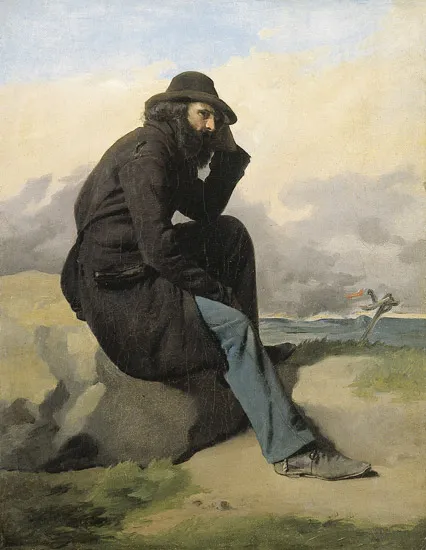
There is a peculiar loneliness that arrives not from neglect, but from being understood too precisely. Spotify knows your Tuesday afternoon mood. Your Netflix homepage bears no resemblance to your neighbor's. The typeface your banking app uses was quietly A/B tested against seventeen alternatives until it produced the micro-expression of trust most reliably on a face like yours. The digital world has become extraordinarily attentive — and somehow, in that attentiveness, something essential has gone missing.
Hyper-personalization is among the most celebrated achievements of contemporary interface design. It is also, a growing chorus of designers and cultural theorists now argue, one of its most corrosive. The same algorithmic intelligence that surfaces the perfect song at the perfect moment has, over the course of a decade, dismantled the conditions under which shared cultural experience becomes possible.
The Promise That Arrived Perfectly Wrapped
The original pitch was seductive and not entirely dishonest. Personalized design, its architects argued, was fundamentally democratic — a corrective to the one-size-fits-all tyranny of mass media, where a handful of editors and network executives determined what millions of people would see, hear, and value. The algorithm, by contrast, would listen. It would learn. It would build you a world calibrated to your specific sensibility.
For a time, this felt like liberation. Early adopters of recommendation engines described the experience in almost spiritual terms — the uncanny sensation of being genuinely seen by a machine. Designers celebrated the shift as the maturation of user-centered thinking, the logical endpoint of decades of human-computer interaction research finally bearing fruit at scale.
What the pitch obscured was the distinction between being understood and being isolated. These are not the same condition, though they can feel identical from the inside.
Aesthetic Bubbles and the Disappearing Commons
Consider what has happened to visual culture in the decade since algorithmic curation achieved dominance. In the analog era — and even in the early internet — there existed a shared aesthetic commons. People disagreed about what was beautiful or relevant, certainly, but they were largely disagreeing about the same things. A magazine cover, a network television title sequence, a widely distributed film poster — these objects moved through culture as collective references, available to be argued over, embraced, or rejected by anyone who encountered them.
Algorithmic design has replaced that commons with millions of private galleries, each curated to perfection, each hermetically sealed. A user whose Instagram feed has been shaped by three years of engagement data inhabits a visual universe that may bear almost no resemblance to that of someone sitting across from them at a dinner table. The aesthetic vocabulary they have absorbed — the color palettes they find soothing, the typographic registers they associate with credibility, the spatial compositions they instinctively trust — has been constructed by a system optimizing for individual retention, not collective coherence.
This fragmentation has consequences that extend well beyond aesthetics. Shared visual and cultural references are among the primary mechanisms through which communities — neighborhoods, generations, nations — develop a sense of common identity. When those references are replaced by individualized streams, the social infrastructure they once supported begins to erode quietly, without fanfare, one personalized homepage at a time.
Designers at the Threshold
The designers most directly implicated in this transformation are not oblivious to it. Across studios in New York, San Francisco, and Chicago, a conversation is underway — cautious in some quarters, urgent in others — about the ethical dimensions of personalization as a design philosophy.
The tension is genuine and not easily resolved. Designers who have spent careers advocating for accessibility and inclusion recognize that truly universal design has always been something of a myth — a default that served some users far better than others. Personalization, in this reading, is simply an honest acknowledgment of human difference. To design for everyone, the argument goes, is often to design for no one in particular, which historically meant designing for the presumed default user: white, male, able-bodied, and Anglophone.
And yet the critics of hyper-personalization are not arguing for a return to that default. They are pointing to something more subtle — the difference between designing systems that accommodate difference and designing systems that actively prevent encounter with anything outside one's established preferences. The first is inclusive. The second is something closer to a sophisticated form of confinement.
The UX researcher and author Indi Young has written compellingly about the distinction between personalization that serves user agency and personalization that merely flatters existing behavior. The latter, she notes, does not expand a person's world — it contracts it, smoothing away the productive friction that genuine cultural encounter requires.
The Texture of Friction
Friction, in contemporary design discourse, has long been treated as a problem to be engineered away. Seamlessness is the aspiration. Every unnecessary click, every moment of confusion or delay, represents a failure of the designer's craft. This philosophy has produced interfaces of genuine elegance — and it has also produced environments so frictionless that nothing unexpected can gain a foothold.
But cultural growth, both individual and collective, has always depended on precisely the kind of unexpected encounter that frictionless personalization eliminates. The bookstore browser who picks up a volume they would never have searched for. The radio listener who stays tuned through an unfamiliar genre and discovers a new vocabulary for feeling. The museum visitor who lingers before a work that confuses them until it doesn't. These are not inefficiencies. They are the conditions under which taste expands, empathy develops, and the self is challenged to accommodate something genuinely other.
A design philosophy that optimizes away these moments in the name of relevance is not, in the end, serving the user. It is serving a version of the user that has been frozen in place — a behavioral profile mistaken for a person.
Toward a Design of Productive Encounter
None of this is an argument for indifference to the user's experience, nor for the return of the editorial gatekeepers who once decided, with considerable arrogance, what culture the public deserved. It is, rather, a call for a more honest accounting of what personalization actually delivers and what it quietly takes away.
Some designers are already working in this direction. Projects experimenting with what might be called "serendipity by design" — systems that deliberately introduce lateral connections, unexpected adjacencies, and cross-community exposure into otherwise personalized streams — suggest that the binary between tailored relevance and shared experience is a false one. It is possible to build interfaces that know you well enough to introduce you to something you don't yet know you need.
This is harder than optimization. It requires holding two imperatives in tension — honoring individual difference while preserving the conditions for collective cultural life. It is, in other words, precisely the kind of design problem that cannot be solved by an algorithm alone. It requires judgment, values, and a willingness to prioritize something other than engagement metrics.
The loneliness that hyper-personalization produces is not incidental. It is structural — built into the architecture of systems designed to keep us returning by reflecting us back to ourselves with ever-greater fidelity. The antidote is not less sophisticated design. It is design sophisticated enough to understand that a person is not the same thing as their data, and that the most meaningful experiences are rarely the ones a machine could have predicted.