Admission to Nothing: The Gallery Experience That Sells You an Empty Room
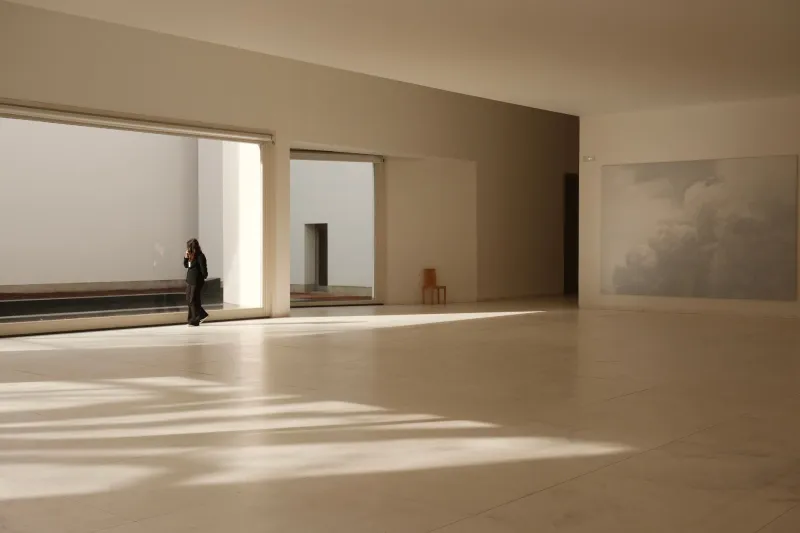
There is a particular kind of courage required to stand in a white room and insist that you are having an experience. Not the uneasy courage of confronting difficult imagery or navigating the moral complexity of a provocative installation — but something quieter, more internal. The courage to trust that the frame is the art, that the architecture is the argument, and that whatever you feel in the absence of objects is precisely what the artist intended you to feel.
This is the proposition being made, with increasing confidence and increasing ticket prices, by a cohort of galleries across the United States and Europe. The empty room — or more precisely, the curated empty room — has emerged as one of the most talked-about and genuinely divisive formats in contemporary exhibition practice.
The Architecture of Absence
To call these spaces empty is, of course, to misread them entirely. That, at least, is the position of the galleries and artists engineering these encounters. What appears to be nothing is, in their framing, a highly controlled sensory environment: light calibrated to shift across the day, acoustic conditions manipulated to amplify the sound of one's own breath, temperature held at a precise degree that registers as neither comfortable nor uncomfortable. The visitor is not looking at art. The visitor, in the most literal sense, is the art — or at least the final component in its completion.
This lineage is not new. Yves Klein's Le Vide — his 1958 exhibition of an emptied Parisian gallery — established the conceptual template that contemporary practitioners are now monetizing with considerably more sophistication. What has changed is not the idea but the infrastructure around it: the marketing language, the admission structures, the membership tiers that grant access to what galleries are now calling "contemplative programming."
In New York, Los Angeles, and Chicago, several institutions have begun offering what they describe as "threshold experiences" — ticketed events in which visitors enter a prepared space alone or in groups of two, having signed agreements not to photograph the interior. The confidentiality is not incidental. It is part of the product.
Who Is Buying Emptiness, and Why
The collector profile drawn to this work is worth examining. These are not, by and large, individuals who lack access to visual stimulation. They are, almost uniformly, people who have more objects than they can meaningfully attend to — whose walls are hung, whose shelves are considered, whose homes have been featured in the kind of publications that use the word "considered" as a compliment. The empty gallery, for this audience, functions as a form of relief.
But relief is too simple a word for what is actually being transacted. Collectors who support artists working in this mode describe something closer to intellectual permission — the sense that they are being granted access to a cultural conversation that prizes rigor over spectacle, concept over commodity. In a market glutted with objects competing for attention, the absence of an object becomes its own form of scarcity.
There is also, unmistakably, a status dimension. To appreciate nothing — to have the cultural literacy to understand why nothing is being offered and to find it sufficient — signals a particular kind of sophisticated detachment. It is the aesthetic equivalent of ordering off-menu: the pleasure is inseparable from the knowledge that not everyone could do it.
The Critics Who Cannot Look Away
Not everyone is persuaded. The skepticism directed at experience-based, object-free exhibitions tends to cluster around two related concerns: accessibility and accountability.
The accessibility critique is straightforward. When a gallery charges admission to enter an empty room, it is — whatever its conceptual justifications — asking visitors to pay for something that cannot be assessed in advance, returned if unsatisfying, or compared against a standard. The power dynamic is entirely in the institution's favor. The visitor who feels nothing, or who feels confused, or who feels that they have been gently defrauded, has no recourse. The experience is, by design, unfalsifiable.
The accountability concern runs deeper. Critics have noted that the language surrounding these exhibitions — words like "presence," "duration," "threshold," and "encounter" — can function as a kind of intellectual smokescreen, lending philosophical weight to what might, in less credulous circumstances, be recognized as an elaborate exercise in brand positioning. The gallery, after all, benefits from the aura of radicalism without having to bear the cost of producing a physical object that could be evaluated, criticized, or rejected on aesthetic grounds.
From Object to Occasion
And yet the trend persists, and grows, and commands serious attention from serious people. Perhaps because the critique, however valid, misses something essential about what these spaces are actually doing to the people who enter them.
The shift from object-based to experience-based value in art is not merely a market phenomenon. It reflects a genuine cultural renegotiation of what art is for. In a moment when images are infinite and attention is the scarcest resource, the gallery that offers nothing is, paradoxically, offering the most demanding thing imaginable: an unstructured encounter with one's own perceptual apparatus, unmediated by content.
Whether that encounter is art, therapy, or theater depends entirely on the frame you bring to it. Which is, of course, precisely the point.
The curated void does not ask you to look at something. It asks you to notice what happens when there is nothing to look at. For a certain kind of visitor — one with the patience, the preparation, and the willingness to sit inside a question without demanding an answer — that turns out to be more than enough.
For everyone else, there is always the gift shop.